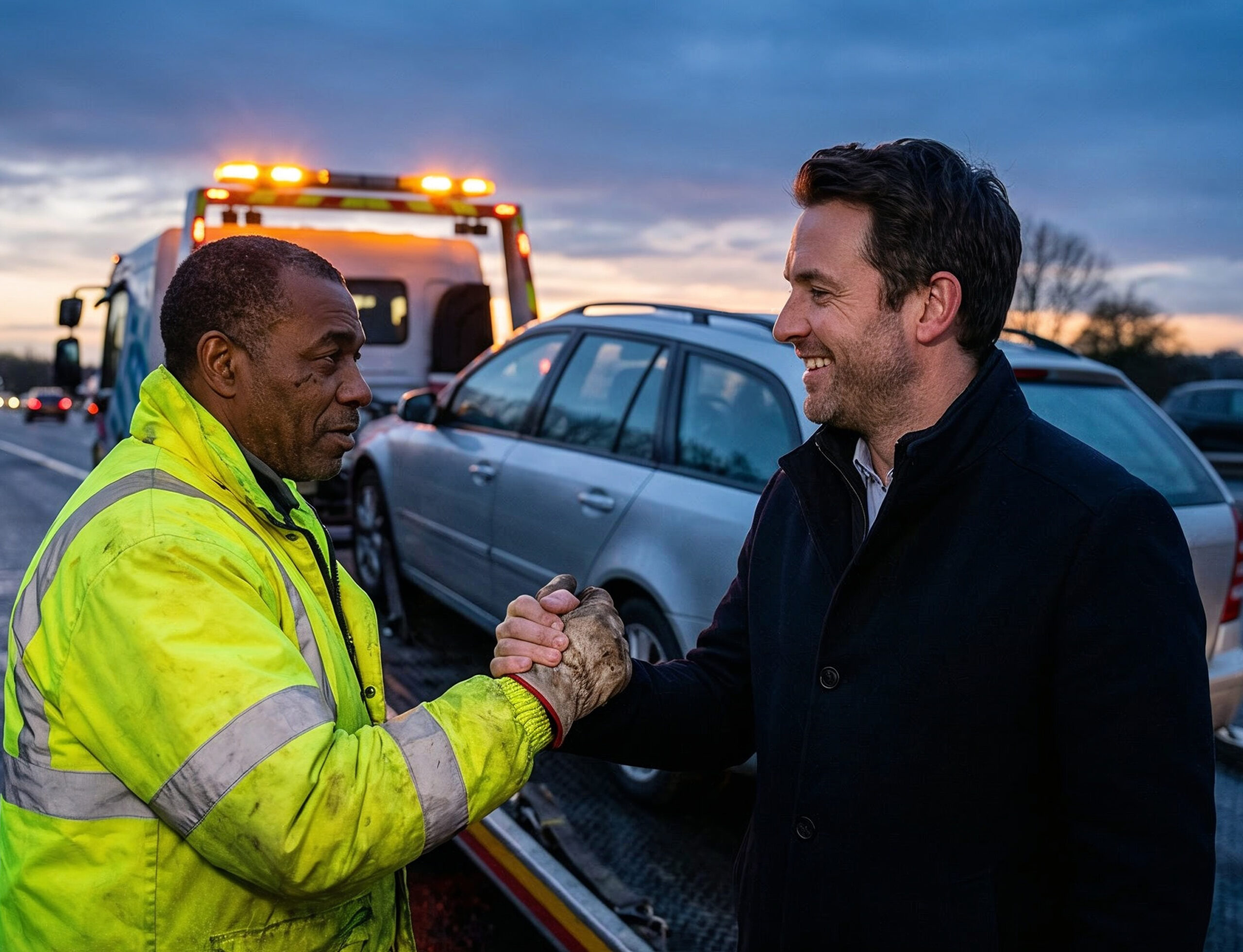
The clocks go back on Sunday 25 October, and for most operators that’s the unofficial start of winter. So we looked back at last autumn’s call-outs across the Apex ANS network to see what really changes, and when.
Nobody needs telling that winter is busier. What’s more useful is knowing when the climb actually starts, what’s driving it, and where it puts the most pressure on your trucks and your team.
What the numbers show
The rise doesn’t wait for the first frost. In fact, the quietest week of the whole autumn came in mid-October. From there, call-outs across the network climbed steadily, and November ended up nearly 30% busier than October.
The peak came in the week of 17 November, when the network was handling almost 15,000 call-outs a day. That same week, flat batteries spiked to more than 1,000 a day, around double the October level, which points to a cold snap. Batteries that limped through the summer give up as soon as the temperature drops, and they all seem to go at once.
It’s a reminder that the busy season doesn’t arrive on a set date. It creeps in over a few weeks, and then one cold spell can turn a busy week into the busiest of the autumn.
These figures come from the Apex ANS network. Get the latest numbers in your inbox every month. Sign up for the ANS industry report
Darker evenings, more pressure
Accident jobs across the network held steady at around 1,000 a day right through the autumn. The extra work was breakdowns, piled on top. What changes for accidents is when they happen. Once the clocks go back, the evening rush hour suddenly happens in the dark, and the AA sees crashes between 4pm and 7pm go up by 11% in the weeks that follow.
More jobs on their own are manageable. The pressure comes when steady accident work and a surge of breakdowns land in the same shift. An accident on a dark dual carriageway needs an experienced driver and the right kit on board. A run of flat batteries on a Monday morning needs speed and plenty of trucks on the road.
Getting the right truck and the right person to each job, first time, gets harder as winter goes on. Kit gets lent between trucks and doesn’t always come back. Newer drivers take on their first winter motorway jobs. And on the busiest nights, there’s no time to double-check.
Knowing what’s on every truck, and who can do what
On a busy winter shift, knowing exactly what’s on each truck and who’s signed off for what makes all the difference. That’s what two features in Apex RMS are for. Equipment lists record what should be on each vehicle, so you can see what a truck is carrying before it’s sent. Training packs keep your team’s training in one place, so it’s clear who’s signed off for which jobs.
Jamie Larkin from our support team shows how to set up both in a 30-minute webinar on Wednesday 7 October.
Sources
- Apex ANS network: recorded call-outs, September to November 2025. These are call-outs across the ANS network, not national figures. November figures exclude 1 to 4 November, where records are incomplete.
- Evening crashes rise after clocks change, the AA, 23 October 2025 (Accident Assist data, 2022 to 2024)