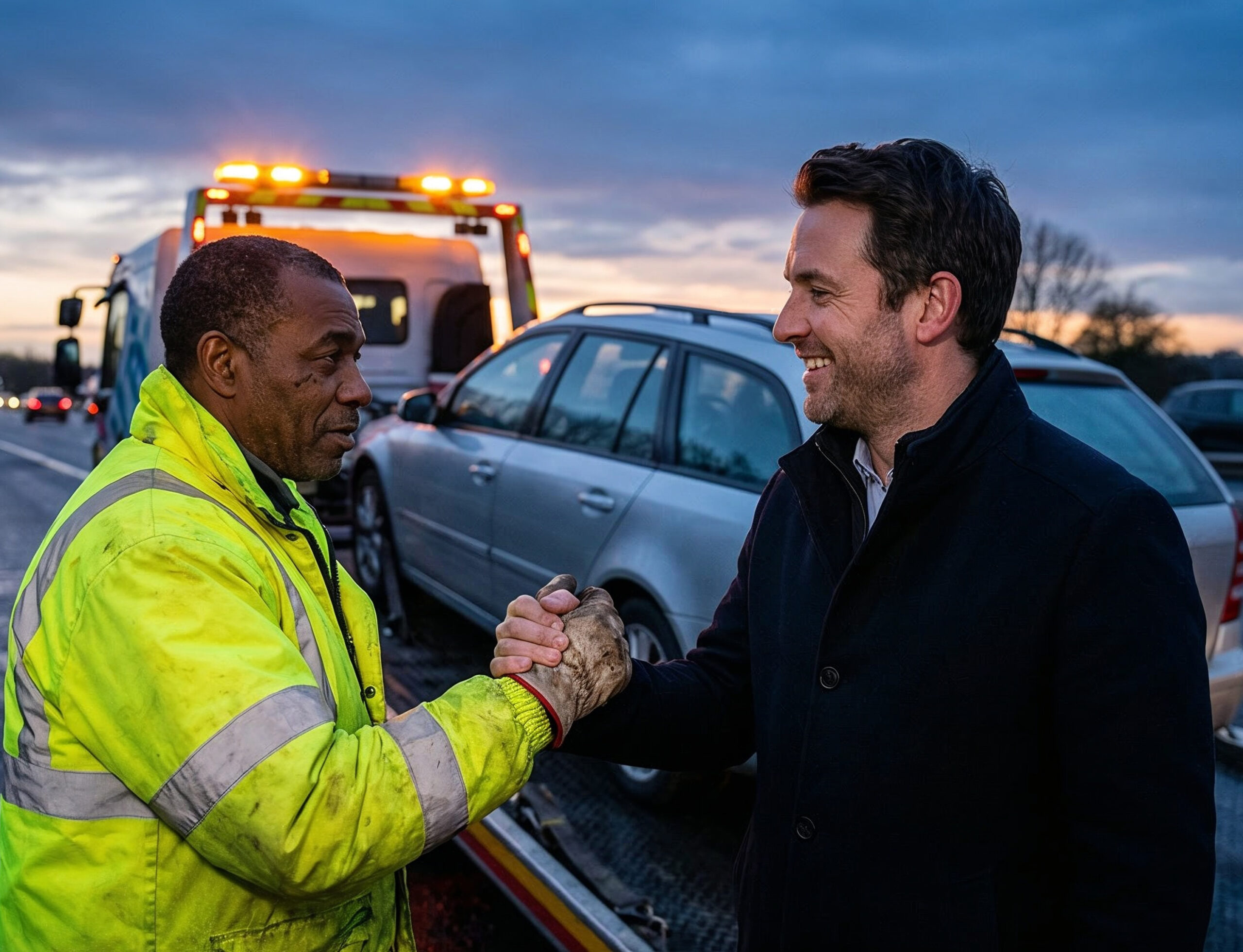
Fastrack Tyres launched in London in 2012 when Zak Haji and his co-directors spotted a problem that was frustrating drivers everywhere: modern cars increasingly came without a spare tyre, leaving stranded drivers with no quick fix.
“A lot of cars were getting manufactured with no spare tyre,” Zak recalls. “Not being able to get a new tyre sorted quickly for people was an issue, and we saw that the market had the potential.”
Starting with one van, Fastrack grew fast – larger premises, then 12 vehicles. Today they specialise in the Super-Car and high-end client market, including sports stars, musicians, and royalty. Plans to expand into other major cities were paused during Covid but are now back on the table.
As an emergency service, Fastrack doesn’t work by appointment – they respond to stranded drivers, wherever they are. Customers phone in, give their location, and a technician heads out to fix the problem on the spot, usually within 60 to 90 minutes.
That model works well at small scale. But as the fleet grew, so did the complexity. Managing tyre stock, tracking jobs, recruiting and retaining technicians, maintaining records – all of it was beginning to strain under the weight of the operation.
“With growth came the difficulty of maintaining records, as well as locating the right tyre.”
Zak Haji, Director, Fastrack Tyres
Fastrack tried a tyre-specific software system, which helped initially, but it couldn’t connect them to the major breakdown clubs like the AA, RAC, and Green Flag. That missing link was costing them jobs and limiting their reach. The search for something better began.

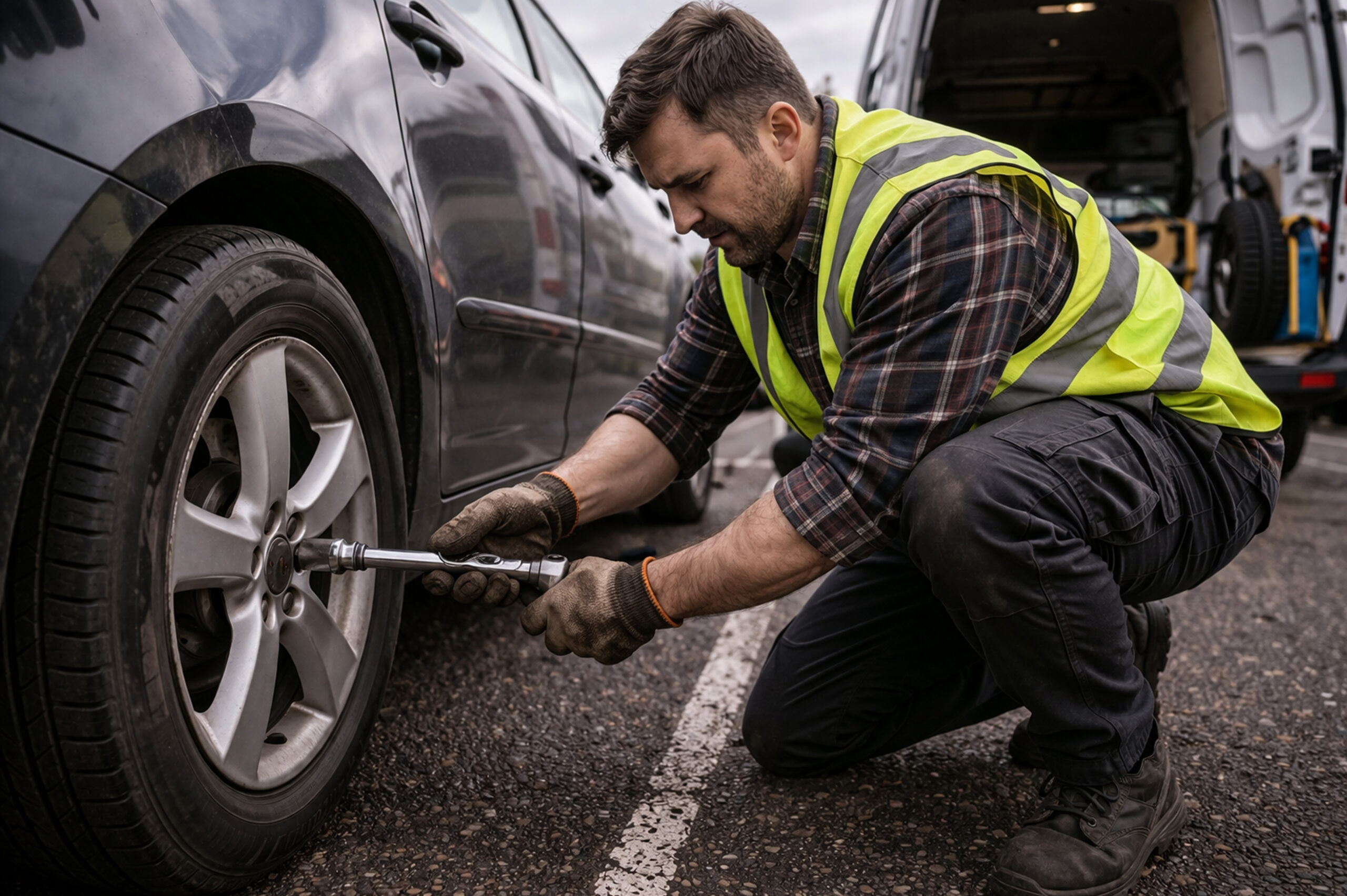
The AA, RAC, and Green Flag all operate on the Apex RMS network. For Fastrack, joining it wasn’t just a software decision – it was a route into a steady flow of work.
“Although it’s marketed as recovery software, for us Apex RMS was something we actually needed,” says Zak. “It’s worked wonders because now we are connected to the clubs.”
Like many operators, Fastrack didn’t switch everything over at once. Initially they used only the core job management functions, with technicians still starting from base and jobs sent out by email. The transition was gradual – and intentional.
“The system’s amazing,” says Zak, “but because it’s such a smart system with broad capabilities, we were a bit reluctant to just explore the whole thing at the time.”
On-site training changed that. Fastrack started taking on more of the platform’s functionality, and the results were immediate. Technicians moved to PDAs. Paper disappeared. Communication became faster and more accurate.
“There is so much to this system, it’s unreal. It’s working really well for us.”
Zak Haji, Director, Fastrack Tyres
Fleet management became a daily essential. The platform now tracks service schedules, vehicle details, and automated stock ordering – matching the exact tyre specification for each job and creating purchase orders without anyone having to do it manually.
“It has definitely removed some of the obstacles of organisation,” says Zak. “The software tells us when our services are due, plus any detail we need about the vehicles. We can send rotas and messages to our technicians, and message a customer to ensure we have an accurate location.”
That last point matters more than it might seem. Stranded customers aren’t always great at describing exactly where they are – especially if they’re on a motorway or unfamiliar road. Now, controllers can zoom into the map at the touch of a button and see precisely where a vehicle is.
Apex RMS runs more than just jobs. Fastrack uses it for rota management, holiday tracking, HR records, and custom forms for tyre fitting – all tailored to their workflow. Each morning, Zak receives an automated daily report detailing every job completed, every outcome code, and every technician’s activity.
“With everything in one place, I know if there are any issues,” he says. “With the old system, I’d have to go into each job to check how things went. With Apex, I literally tick the boxes I want and get emailed a report.”
When Fastrack made the switch, they knew a change this big needed to work for the technicians out on the road – not just management. So they set up a group chat where staff could ask questions, flag issues, and suggest improvements.
“We invited them to highlight if there was anything that would make their lives easier,” says Zak. A few items came back. Fastrack adapted. “Now everyone’s got thumbs up for the system.”
The practical benefits of going paperless turned out to be significant. Illegible handwriting had been a recurring problem – job sheets coming back from fleet companies that even the technicians themselves couldn’t decipher. That problem is gone.
Going paperless has also lifted Fastrack’s professional image – signalling to clients that they operate at the top of their field. For a business serving high-end customers including sports stars and royalty, that matters.
Today, Fastrack runs entirely on Apex RMS – no parallel systems, no separate accounts software. Everything from dispatch to invoicing runs through a single integrated platform.
Fully integrated with AA, RAC, and Green Flag, opening up a reliable flow of breakdown club work.
Technicians use PDAs on the roadside. No more illegible job sheets, lost records, or manual stock checks.
Tyre orders are created automatically based on jobs completed – saving time and removing manual checking.
Automated reports give Zak a full picture of the previous day’s jobs, outcomes, and technician activity – every morning.
Holidays, rotas, and staff records all managed in the same platform as jobs and fleet.
Controllers can pinpoint exactly where a stranded vehicle is, removing the guesswork from dispatch.
“The biggest regret I have is why didn’t I do it sooner?”
Zak Haji, Director, Fastrack Tyres