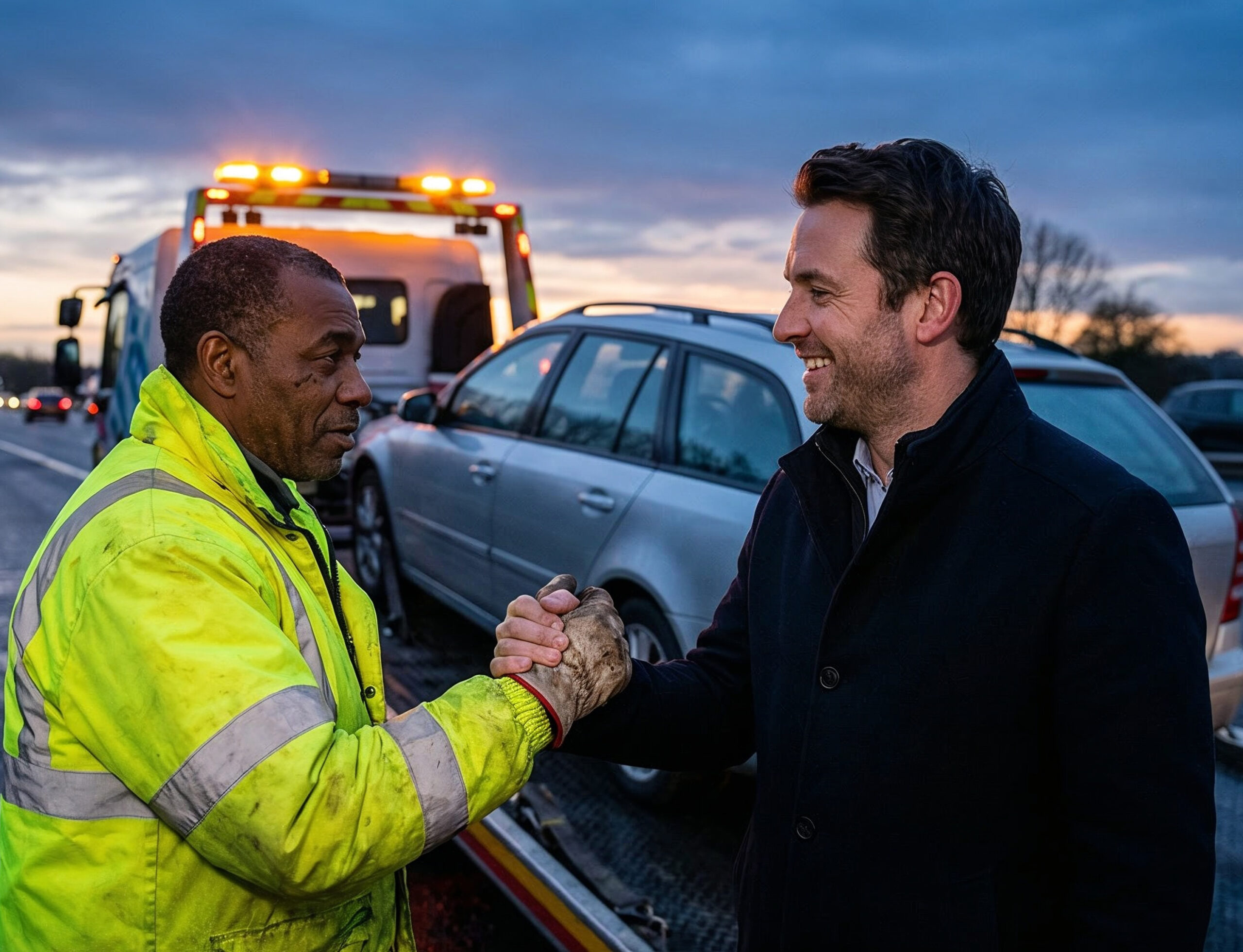
The Women Driving Change in Vehicle Recovery
At Apex Networks, we’ve spent 20 years working alongside the people who keep vehicle recovery moving – operators, controllers, managers, and drivers across the UK. This International Women’s Day, we wanted to shine a light on some of them. International Women’s Day is a chance to recognise the people who keep our industries moving – and in vehicle recovery, that includes a growing number of talented women working across operations, workshops, control rooms, and leadership roles.
While recovery has historically been male dominated, today more women than ever are building successful, long-term careers, bringing fresh perspectives, valuable skills, and a strong sense of teamwork to an industry built on resilience, problem-solving, and operational precision.
To celebrate the day, we spoke with three women from across the recovery world about their experiences, what they love about the job, and why they’d encourage others to consider joining the industry.
Meet the women behind the stories
Karen Ellis – Founder and Managing Director, Karen Ellis Consulting Ltd
Karen began her career in vehicle recovery 36 years ago, coordinating patrols and supporting customers on the motorway. She later moved into operations, management, and business development, gaining experience that now informs her consultancy work.

Gemma Manchett – Transport Manager, Manchetts Rescue & Recovery
Gemma grew up around vehicle recovery and has been part of the Manchetts team professionally since 2013. She oversees health & safety, compliance, and operational standards across multiple depots, working closely with emergency services, highways, and the public.

Deb Gallimore – Director, Ruby Vehicle Services Ltd
Deb joined the industry as a newcomer after meeting her husband and helping to launch Ruby Vehicle Services Ltd in 2019 with just one man and one van. She initially focused on finance and administration and has played a key role in the company’s growth to a team of 10, overseeing the operational foundations that support the business today.

More than just trucks on the road
Vehicle recovery isn’t a predictable nine-to-five. It’s fast-paced, hands-on, and constantly changing, which is what makes it so rewarding.
Every operation, from the roadside to the control room, demands quick thinking, careful planning, and teamwork under pressure. While the trucks are the visible part of the job, it’s the decisions behind the scenes that keep everything running safely and efficiently.
“Every day is so different,” Karen explains. “I consult with operators across the country, helping them navigate challenges and supporting their teams. Some days I’m advising on processes or business development, other days mentoring managers and sharing the knowledge I’ve gained over the years. It’s the variety and the people that make my work so fulfilling – no two days are ever the same.”
For Gemma, variety comes from balancing operational, legal, and people-focused responsibilities:
“Every day and every incident is different. I’m constantly assessing risk, making decisions, and supporting a team working in challenging conditions. One day I might be planning maintenance schedules, the next I’m investigating an incident – it keeps me on my toes.”
Deb brings a mix of operational oversight and people development to her role. She’s taken on extra training and qualifications to handle everything from compliance to team management with confidence.
“My days are never the same. One minute I’m reviewing processes or managing operations, the next I’m coaching the team, helping them grow, or tackling whatever the day throws at us. Taking on this role has pushed me to keep learning, and it’s satisfying to see that knowledge makes a real difference for the team and the business.”
Purpose, pride and people
Beyond operational complexity lies something deeper: purpose. Recovery is ultimately about helping people – often on one of their worst days.
For Gemma, pride comes from fostering a strong safety culture across multiple depots:
“Good compliance and a strong safety culture genuinely prevent incidents. When drivers understand why procedures matter, you see the standard of the whole operation improve. You rely on each other and build a lot of trust. That sense of collaboration makes even the toughest days rewarding.”
For Karen, it’s the relationships built over decades, along with solving complex problems and supporting teams under pressure:
“It’s the knowledge gained but more importantly, the relationships that I’ve built. Seeing people develop and knowing I’ve helped them along the way – that’s what has stayed with me.”
Deb has found renewed motivation in developing her team, particularly younger employees entering the sector:
“I enjoy doing training and development. It makes me feel better to teach people why we go through these hoops. It’s about helping people work to their strengths and giving them a sense of ownership – that makes a huge difference to the team and the service we deliver.”
A changing and more inclusive industry
Recovery has historically been male dominated, but all three women have seen the industry evolve. Professionalism, regulatory oversight, and support for wellbeing have all improved, creating a safer and more inclusive environment.
Alongside this shift, there are still many family-run recovery businesses across the UK – and in many of these businesses, women are the backbone of the office operation – managing compliance, handling accounts, coordinating drivers, and keeping everything running day to day. While their work isn’t always visible roadside, it is fundamental to the success of the industry.
“There’s a much stronger focus on supporting staff and recognising that mental wellbeing is just as important as physical safety,” Gemma notes.
Having two of her sons working alongside her, Deb also sees the impact on the next generation:
“They see that it’s absolutely fine to have a female driver or mechanic – something that wasn’t really common 10 years ago. Working with family is rewarding, but it comes with challenges; you don’t just leave work at the door, you take it home with you too.”
Karen adds that respect and mutual support are central:
“A lot is about supporting and respecting each other – whether that’s supporting young parents or flexible working patterns. Respect goes a long way. Running my own business gives me freedom to build my schedule around life. You feel more in control and supported than ever. I work with amazing women who run transportation businesses and set clear boundaries – that respect is mutual.”
Flexible shifts and supportive policies are helping people build long-term careers, showing that the industry is evolving not just in operations, but in culture.
Strengths that often go unnoticed
When asked what women bring to the industry, all three highlighted everyday strengths that often go underappreciated but are essential to keeping operations running smoothly.
Communication, organisation, and calm decision-making were recurring themes.
Deb focuses on helping people work to their strengths and creating purpose within teams: “You give people support when they need it and help them work to their strengths. When people feel trusted and understand their role, you see their confidence grow, and that makes a real difference to the whole team.”
Karen points to the complexity of operational roles, which often requires juggling multiple responsibilities at once:
“Women can multi-task – accounts, business development, budgeting – all at once. Dispatch is very complex and requires a lot of multi-tasking.”
Gemma adds that the increasing compliance focus in the industry has made skills like attention to detail and clear communication just as important as practical recovery skills.
“Communication is a huge part of the job. We deal with distressed motorists, accident scenes, and occasionally conflict situations. Being able to de-escalate, explain clearly and manage situations calmly is often undervalued. Attention to detail is equally important – good operators are methodical and considered in their decision making, which is a major asset in recovery.”
Advice for the next generation
For all three women, one message came through loud and clear: encouragement, curiosity, and continuous learning are key. Their advice provides practical guidance and confidence for women entering this demanding but rewarding sector.
Karen stresses mentorship and insight:
“Information is key. Look at who’s done it, get real insight into the role, and seek support and mentors to help you through tough times. I had a mentor, and now I’m mentoring others so I can hopefully inspire the way I was inspired.”
Deb focuses on collaboration and practical support:
“Be a woman’s woman – hold each other up. We’re all in the same boat. There is always someone who knows someone – lean on that. Don’t shy away from asking questions.”
Gemma highlights hands-on learning and competence:
“Vehicle recovery has such a wide range of roles – driving, mechanics, control room operations etc. Ask questions, gain training, and don’t be put off by thinking you need to know everything immediately. Competence comes with exposure and experience. Recovery is demanding and unpredictable, but incredibly rewarding – for many of us, it becomes far more than just a job.”
Looking ahead
These stories show that vehicle recovery isn’t just about trucks on the road – it’s about people, problem-solving, and purpose. Women like Karen, Gemma, and Deb are shaping the industry, driving change, and inspiring the next generation through leadership, mentorship, and example.
Whether it’s fostering a culture of safety, developing teams, or simply showing that women belong in every role from the workshop to the boardroom, their impact is clear. The sector is evolving – more inclusive, more supportive, and more dynamic than ever – and it’s the people within it who make that possible.
This International Women’s Day, we celebrate the women already making a difference and encourage everyone in the industry to continue supporting, mentoring, and inspiring those who will drive recovery forward in the years to come.
Want to see how Apex RMS supports recovery operators across the UK? Speak to our Support team on 0203 195 6757 or email: support@apex-networks.com – we’re always happy to help.