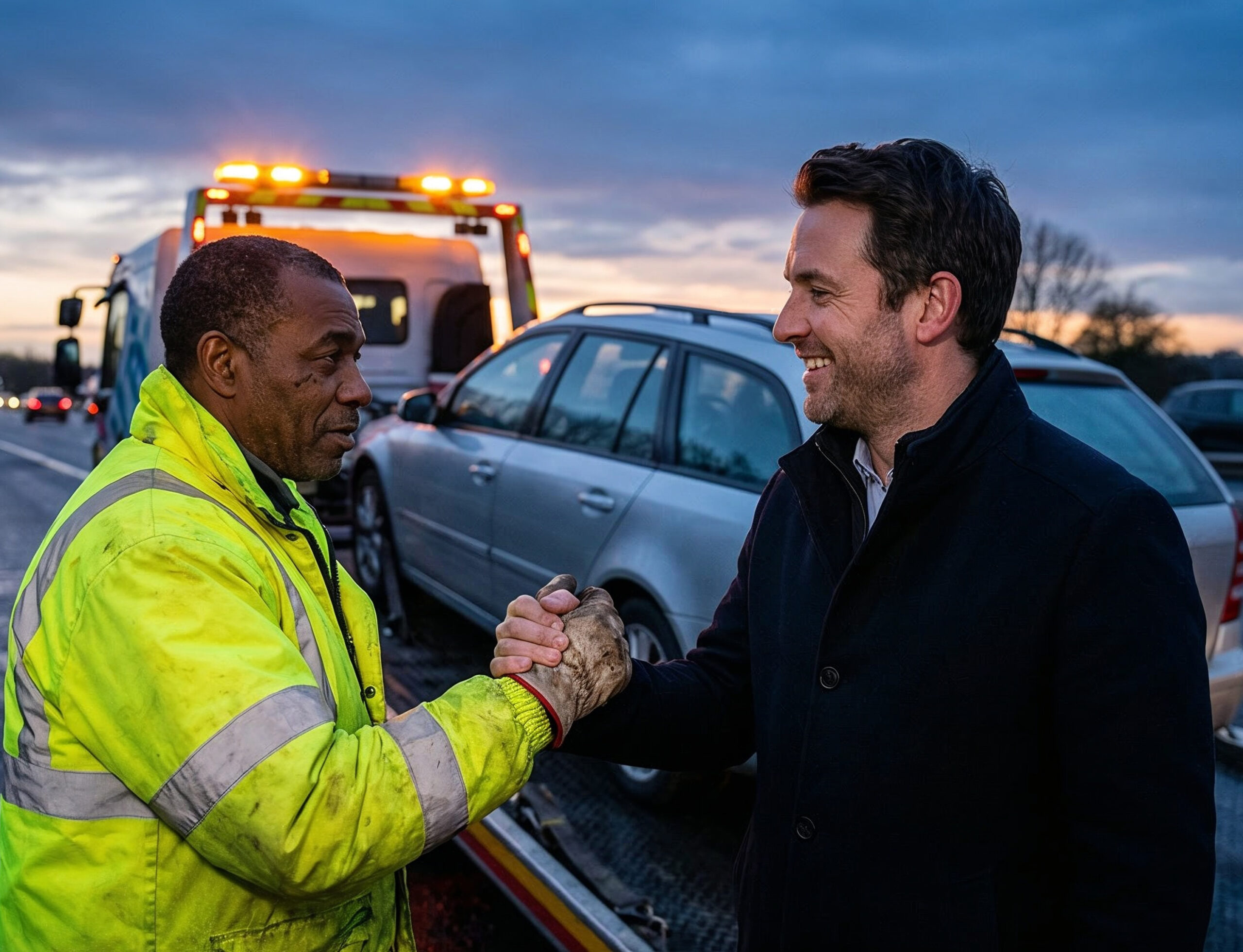
The rise of connected recovery: why data-sharing is reshaping roadside services
By Apex Networks · April 2026 · 5-minute read
Something has been shifting in the vehicle recovery industry. Not dramatically, not overnight — but steadily and with real momentum. The way jobs are managed, reported, and shared between operators and the work providers they serve is changing. And the operators who are leaning into that change are finding it makes a real, measurable difference to how their business runs.
We’ve worked with recovery operators across the UK and Ireland for 20 years. The move towards connected, data-sharing operations isn’t something we’re predicting — we’re watching it happen in real time, across the 3.6 million jobs that pass through our network every year. The benefits are practical, measurable, and increasingly within reach for operations of any size.
What ‘connected’ actually means on the ground
It’s easy to use the word and mean very little by it. So let’s be specific.
A connected recovery operation means that the information generated at every stage of a job — dispatch, arrival, completion, invoicing — is captured digitally, shared in real time, and accessible to everyone who needs it. Your controller knows where every truck is. Your work provider can see job updates the moment your driver makes them at the roadside. Your invoice goes out when the job closes, not two weeks later.
But it’s the end customer who feels the difference most. When someone breaks down, they get an SMS the moment help is dispatched. They can share their precise location via a PinPoint link so the driver finds them first time. They track the recovery truck live on their phone through ResQtrac. And when the driver arrives, they sign off on a digital vehicle condition report in the app — with a video record and a copy sent straight to their inbox. Every one of those steps used to be a phone call to the control room. Now it just happens.
For operators running platforms like Apex RMS with ANS network connectivity, connecting more than 7,000 active drivers and processing over 40 million job messages a year, backed by 99.99% platform uptime — this is already day-to-day reality. The difference it makes to how smoothly a shift runs is something operators tell us about consistently.
Work providers are raising the baseline
The momentum isn’t coming from operators alone. Across the Apex ANS network — which connects over 1,000 operators with 26 breakdown clubs and insurers — the shift is already well underway. Insurers, fleet managers, and breakdown providers are increasingly treating real-time job visibility as a baseline expectation — and operators who can meet it are finding it strengthens those relationships significantly.
When a job is fully digital and connected, work providers can track response times, verify attendance, manage compliance, and process invoices without chasing anyone for paperwork. It reduces friction on both sides. And in a market where SLAs are tightening and performance is closely monitored, operators who can demonstrate consistent, auditable results have a clear commercial advantage. In practical terms, that means a work provider being able to see — at any point — how quickly your team is responding, how jobs are progressing, and how your performance tracks against agreed targets. That kind of visibility builds trust. It turns a transactional relationship into a longer-term one, and it gives operators a much stronger position when it comes to renewing contracts or taking on new work.
Compliance is driving it too
PAS 43, GDPR, operator licensing requirements, insurer audit trails — the expectation that compliance is documented and demonstrable is only increasing. Paper records are difficult to audit and easy to lose. A digital operation generates a compliance trail automatically: every job, every driver action, every vehicle check, logged and timestamped without anyone having to think about it.That matters when it comes to licence renewals, operator inspections, or any situation where you need to demonstrate that your business runs to standard. Having that data readily available — organised, accurate, and retrievable in minutes — removes a significant amount of stress from those processes and reflects well on the operation as a whole.
The EV factor is accelerating this further. Electric vehicles need specific handling, specialist equipment, and different dispatch decisions from the start. Getting the wrong truck to an EV callout is a wasted journey and a delayed driver. Connected dispatch — where accurate vehicle data is available at the point of job intake — makes it far easier to get the right resource to the right job from the outset. It’s one of the reasons features like Reg Lookup, which pulls vehicle specs directly into the job record the moment a registration is entered, are becoming standard practice for well-run operations rather than optional extras.
The opportunity is straightforward
The shift towards connected recovery is good news — and the benefits are tangible from day one.
Digital operations reduce admin time. Real-time visibility means fewer call-backs and wasted journeys. Automated invoicing gets money in faster. A complete compliance record strengthens every commercial relationship you have — with work providers, insurers, and licensing bodies alike.
The operators thriving in this environment aren’t necessarily the biggest ones. They’re the ones who made a clear decision to run their operation on a platform that captures job data automatically, connects them to the networks they work within, and gives them a clear picture of their performance at any point. It’s a decision that pays back quickly and compounds over time.
“When someone’s broken down at the side of a road, the last thing they want is silence. Now they get an SMS the moment help is dispatched, they can track the truck on its way, share their precise location so the driver finds them first time, and sign off on the vehicle condition report digitally — with a copy in their inbox before the truck’s left the scene. Every one of those steps used to be a phone call to the control room. Now it just happens.”
— JP Dekker, Apex Networks
If you’re thinking about making that move — or want to understand what a connected operation looks like in practice — we’re always happy to talk it through.
Speak to our Support team on 0203 195 6757 or email: support@apex-networks.com – we’re always happy to help.